
Kitchens are among the most frequently handled spaces in a home, and food preparation creates extra cleaning concerns. The U.S. Food and Drug Administration (FDA) notes that bacteria and other foodborne pathogens can spread through countertops, cutting boards, utensils, sponges, and other kitchen surfaces. That makes a careful kitchen inspection especially important when different guests use the same space.
Vacation rental hosts also face an unusual challenge. One guest may cook every meal, while another may barely open the refrigerator. A consistent approach to cleanup between bookings can help hosts account for these differences instead of relying on what looks clean at first glance. The goal is to reset the kitchen so the next guest receives a space that feels orderly, usable, and properly maintained.
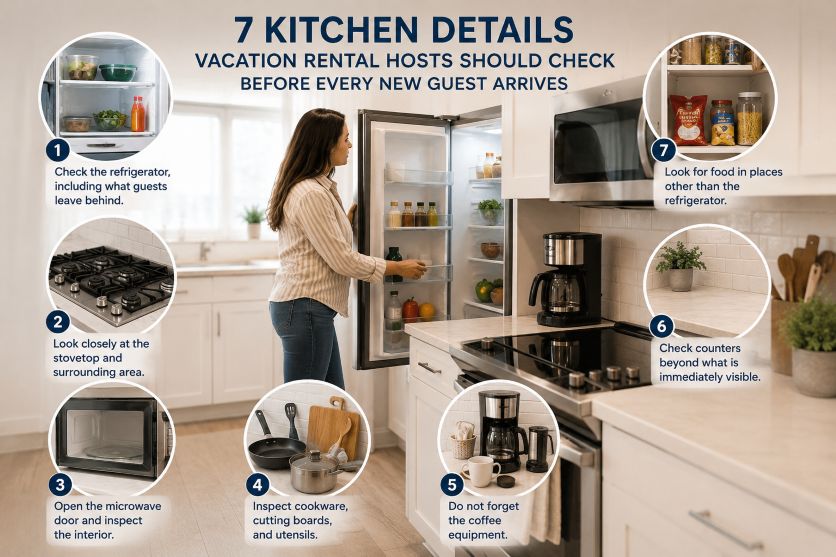
1. Check the Refrigerator, Including What Guests Leave Behind
Start by opening the refrigerator rather than simply wiping the handle. Look through shelves, drawers, door compartments, and the freezer. Remove abandoned leftovers, opened drinks, leaking containers, and other food that should not remain for the next visitor.
The U.S. Department of Agriculture (USDA) recommends keeping refrigerators at 40°F, or about 4.4°C, or below. It also advises using most refrigerated cooked leftovers within three to four days. Hosts usually do not know when a previous guest prepared an unmarked container of food, so leaving it for someone else can create unnecessary uncertainty.
Spills deserve attention as well. The FDA recommends cleaning refrigerators regularly and wiping spills promptly. Check underneath drawers and along shelf edges, where small leaks can easily go unnoticed.
2. Look Closely at the Stovetop and Surrounding Area
A stovetop may look acceptable from across the room while still holding grease around burners, knobs, grates, or the backsplash. Cooking oils can spread beyond the pan, so the inspection should extend to nearby surfaces.
Check burner areas, control knobs, the range hood exterior, and the wall or backsplash behind the stove. Removable grates and drip pans may also need attention. A quick visual check from several angles often reveals residue that is hard to see under normal lighting.
This is also a useful time to confirm that burners and controls appear intact and have been returned to the off position.
3. Open the Microwave Door
The outside of a microwave tells very little about its interior. Food can splatter across the ceiling, side walls, turntable, and inner door. Odors may remain even when the appliance looks clean from the front.
The USDA Food Safety and Inspection Service recommends removing microwave spills and splatters as they occur so residue does not dry onto interior surfaces. Its general cleaning guidance includes using warm water and a soft cloth, with mild soap or dishwashing liquid for heavier residue.
Hosts should remove and inspect the turntable when possible. Check beneath it as well. Small spills often collect in this area and may be missed during a fast turnover.
4. Inspect Cookware, Cutting Boards, and Utensils
Clean-looking cabinets do not guarantee clean contents. Guests may return a pan with grease underneath it or place a poorly washed utensil back in a drawer.
Look at commonly used pans, knives, spatulas, cutting boards, and serving utensils. Check for stuck food, grease, cracks, or excessive wear. The FDA advises washing cutting boards, dishes, utensils, and countertops with hot, soapy water after food preparation. It also recommends replacing excessively worn cutting boards because deep grooves can become difficult to clean properly.
Hosts do not need to inspect every item with the same intensity after every stay. Frequently used pieces deserve the most attention, especially when there are signs that guests cooked extensively.
5. Do Not Forget the Coffee Equipment
Coffee makers are easy to overlook because much of the equipment appears clean after use. The water reservoir, filter basket, reusable filter, drip tray, and carafe may tell a different story.
A household study by NSF found that coffee maker reservoirs were among the kitchen locations where microorganisms could be found. Warm, damp areas can provide favorable conditions for microbial growth, which makes routine cleaning important.
Empty standing water and used grounds. Wash removable components according to the manufacturer’s instructions, and check the machine for residue. Hosts should also inspect kettles, milk frothers, and other beverage equipment supplied to guests.
6. Check Counters Beyond What Is Immediately Visible
Countertops receive contact from groceries, hands, food containers, appliances, cutting boards, and raw ingredients. A surface can look spotless while still needing proper cleaning.
Research from NSF found coliform bacteria on 32 percent of countertops tested in its household germ study. The FDA also warns that cross-contamination can occur when bacteria move between food, hands, utensils, and preparation surfaces.
Move lightweight appliances when practical. Check behind the toaster, coffee maker, and utensil containers. Look along backsplash seams and underneath countertop items. Crumbs and sticky residue often collect where routine wiping stops.
Hosts should also distinguish between cleaning and sanitizing when appropriate. Cleaning removes food and visible soil, while sanitizing is intended to reduce microorganisms on already cleaned food-contact surfaces. Products should always be used according to their labels and surface-care instructions.
7. Look for Food in Places Other Than the Refrigerator
Guests may leave food in cabinets, drawers, bread boxes, or pantry shelves. Some items may seem harmless, but opened packages can create confusion about freshness and ownership.
Check for open snacks, bread, produce, takeaway containers, cooking ingredients, and partially used packages. Pay particular attention to crumbs, leaking bottles, and sticky containers. These small details also matter for preventing kitchen pest problems, since exposed food, crumbs, and residue can provide easy food sources for insects and rodents.
Food residue can also create allergen concerns. Research published by the FDA has examined how cleaning methods affect allergen removal from food-contact surfaces. This reinforces the value of properly cleaning shared preparation areas rather than assuming a quick wipe is sufficient.
A Simple Kitchen Inspection Makes Turnovers More Consistent
A reliable kitchen reset does not need to become complicated. Hosts can follow the same route each time: refrigerator, cooking area, microwave, cookware, beverage equipment, counters, and food storage areas. Moving through the room in a fixed order reduces the chance of skipping less obvious spots.
A short checklist can make the process even more consistent. It can include checking refrigerator temperature, removing abandoned food, opening appliances, examining frequently used cookware, and looking behind countertop equipment.
Visible cleanliness is only one part of preparing a shared kitchen. Food residue, moisture, grease, and forgotten items can remain in places that guests may discover later. A systematic inspection gives hosts a practical way to catch those details and provide each arriving guest with a kitchen that is ready to use.

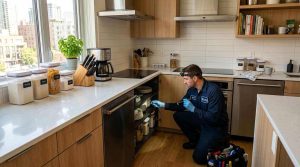 Modern pest control is not just about spritzing chemicals. For this reason, professional exterminators have adopted an integrated approach that will help them find the source of infestation. They are also adopting ways to reduce the hazards to the residents and to the food preparation areas.


 When it comes to watching soccer broadcast (source: 축구중계), the excitement on the screen is only part of the fun. The other half? It’s all about the food. Imagine a spread that scores as many points with your guests as the teams do on the field.
 It’s still summer and fall is yet to come, but we’re featuring a popular Christmas treat, called Peppermint Meltaway, a cheery addition to festive cookie platters. They’re also a hit as Christmas gifts!
 To make the Peppermint Meltaway cookie dough, you will need the following ingredients:
 The modern kitchen is a complex ecosystem of appliances and processes designed to maximize efficiency and culinary output. Among the key players in this setting is the dishwasher—an appliance that not only contributes to kitchen hygiene but also frees up valuable time, enabling more


 What are the benefits of starting a mobile food truck business?









 Snow biking offers an incredible way to experience the mountains, combining the thrill of dirt biking with the beauty of snowy landscapes. Staying fueled for a full day of snow biking, especially on a Timbersled, is crucial for both safety and enjoyment. With cold temperatures and high physical demands, riders must focus on the right nutrition and hydration to keep their energy up throughout the day.



 In the world of culinary arts, there’s an often overlooked audience with a discerning palate: our feline friends. While many of us enjoy experimenting with a variety of dishes after asking ourselves what can cats eat?, it’s crucial to ensure that the foods we serve our pets are not only tasty but also safe for them to consume.


 TikTok has revolutionized the way we share and discover unique food trends. One such trend that has taken the platform by storm is whipped coffee. Also known as Dalgona coffee, this frothy and velvety concoction has

 As a
As a 
 Food is a universal language. It’s something that everyone understands and enjoys. In the world of social media, it’s no different. Food is a way to connect with your followers on a deeper level, and it can also be used as an opportunity to get new followers by expanding your audience.